How to Generate Ecommerce Leads Using Conversational Commerce in 2026
Discover the frameworks and techniques that the best performing eCommerces are using for generating leads with Conversational Commerce and AI.
Discover the frameworks and techniques that the best performing eCommerces are using for generating leads with Conversational Commerce and AI.
Most ecommerce brands still rely on pop-ups and static forms to capture leads, and then wonder why their lists are full of unengaged contacts and bot sign-ups. The problem isn't the offer. It's the method.
Conversational commerce flips the approach: instead of interrupting shoppers with a form, AI agents engage them in real dialogue, answer their questions, and capture contact information as a natural part of the conversation. This guide covers how to use conversational AI across your website and WhatsApp to generate higher-quality leads, the specific strategies that work in 2026, and how to choose a platform that ties every captured lead back to revenue.
Conversational commerce uses AI chatbots, live chat, and messaging apps like WhatsApp to engage shoppers in real-time dialogue that captures contact information while qualifying purchase intent. Instead of asking visitors to fill out a static form and wait, this approach collects leads through actual conversations — answering questions, offering recommendations, and building trust before requesting an email or phone number.
The difference matters.
A pop-up form interrupts browsing and hopes someone fills it out. A conversational AI agent, on the other hand, helps a shopper find the right product size, suggests alternatives, and then offers to send updates via WhatsApp. The lead capture happens naturally, as part of an interaction the shopper actually wanted.
In 2026, AI agents handle these conversations autonomously: collecting contact details, understanding preferences, and building customer profiles without requiring a human for every exchange.
Modern shoppers expect instant, personalized responses: 71% expect personalized interactions according to McKinsey. Filling out a contact form and waiting hours for a reply feels outdated when competitors answer questions in seconds.
Channel fragmentation adds complexity.
Potential customers aren't just on your website: they're on WhatsApp, Instagram, and on the phone. A lead capture strategy limited to one channel misses opportunities everywhere else.
Then there's scale. Growing brands can't hire enough people to personally engage every visitor. With chatbot interactions costing $0.50 vs. $6.00 for human agents, AI-powered conversational commerce handles thousands of simultaneous conversations while maintaining the personalized feel that drives conversions.
Generic pop-ups interrupt at exactly the wrong moment. A visitor lands on a product page, starts reading, and a modal blocks their view asking for an email. Most shoppers close it immediately, many bounce entirely, reinforcing the conversion barriers that cost ecommerce brands revenue.
Static forms collect email addresses without verifying purchase intent. The result is often a list filled with unengaged contacts, fake addresses, and bot submissions that inflate numbers while delivering zero revenue potential.
Traditional methods are one-size-fits-all. They can't adapt to individual browsing behavior, ask qualifying questions based on what someone is viewing, or adjust their approach for a first-time visitor versus a returning customer.
Forms create a delay between lead capture and outreach. By the time your team follows up, the high-intent shopper who was ready to buy has already found what they wanted elsewhere.
Effective AI agents start by providing value. They answer questions, offer personalized recommendations, or help with product selection—building trust before asking for anything in return. This approach feels helpful rather than transactional, which increases opt-in rates.
AI agents can see what products a visitor has viewed, what's in their cart, and how long they've spent on specific pages. Someone browsing winter coats gets a different conversation than someone looking at running shoes. The lead capture prompt adapts accordingly.
A dialogue-based format reveals information that static forms cannot capture:
Purchase timeline: When is the shopper planning to buy?
Budget constraints: What price range works for them?
Specific preferences: What features or styles matter most?
This context makes leads far more actionable for sales teams.
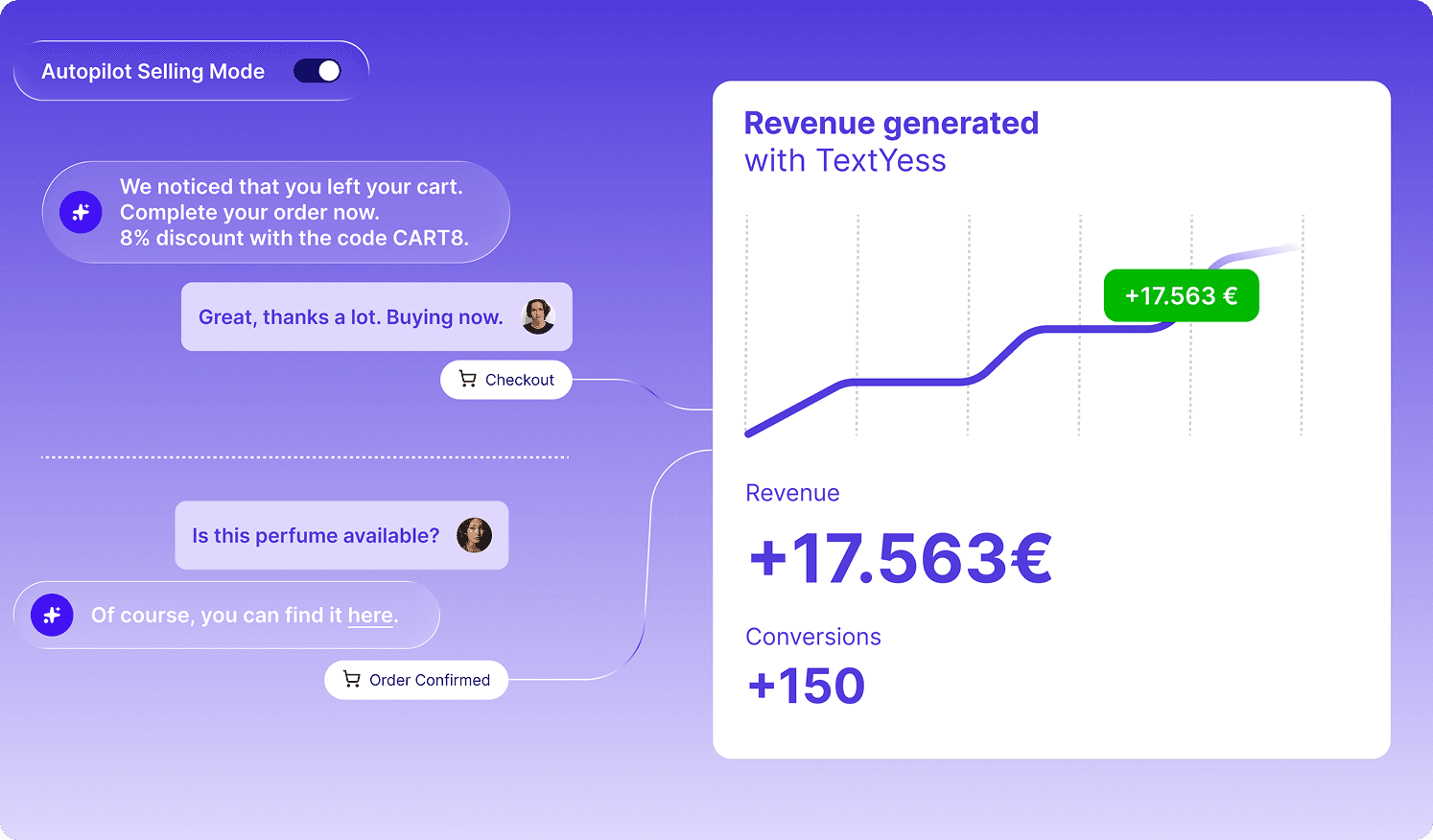
Automated triggers for events like abandoned carts, product page exits, or checkout drop-offs can instantly re-engage shoppers with a conversation. Reaching out within minutes of abandonment—while purchase intent remains fresh—typically outperforms delayed follow-ups.
On-site chat widgets that greet visitors, answer common questions, and capture leads without forcing shoppers to navigate to a separate form consistently outperform passive alternatives. The key is proactive chat automation—reaching out based on behavior rather than waiting for visitors to initiate contact.
WhatsApp, with3 billion monthly users, has become a primary communication channel for shoppers in many markets, particularly across the EU. Click-to-chat ads, on-site QR codes, and proactive WhatsApp outreach meet customers on a familiar, trusted app.
Interactive quizzes guide shoppers to the right products while collecting preferences and contact details in exchange for personalized results. A skincare brand might ask about skin type, concerns, and goals—then offer to send a customized routine via email or WhatsApp.
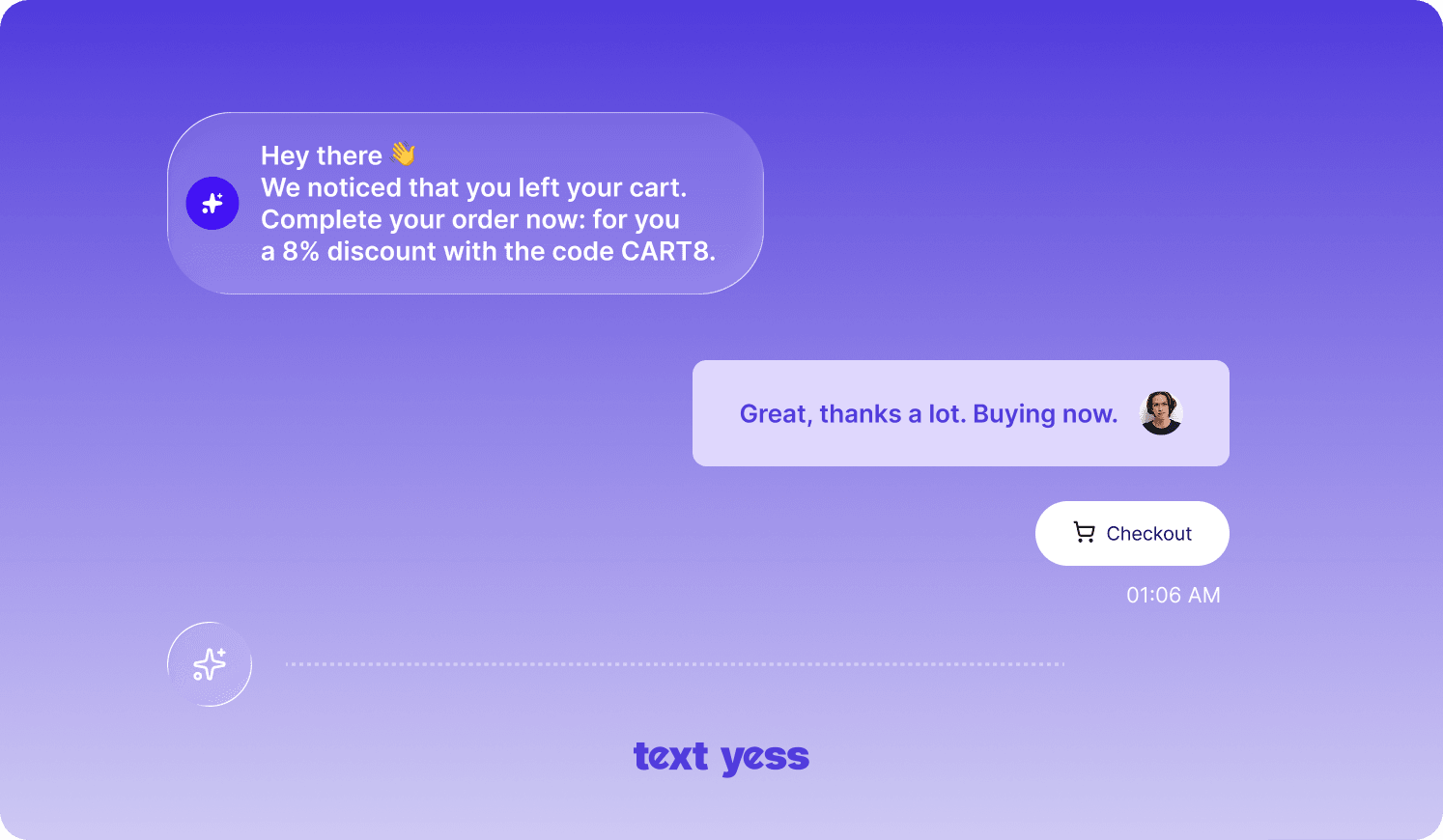
With 70.22% of online carts abandoned according to Baymard Institute, abandoned cart recovery triggers prompt a conversation that captures contact information while offering an incentive to complete the purchase. This approach works because it addresses the specific reason for abandonment with a clear call to action.
VIP access, early product launches, and limited-time offers serve as powerful lead magnets when delivered exclusively through conversational channels. The exclusivity creates urgency, and the conversational format makes opting in feel like joining an inner circle.
Proactive campaign messages—new arrivals, restocks, promotions—that invite replies capture leads directly from engaged recipients. Unlike broadcast emails, these messages open a two-way dialogue that can immediately qualify interest.
Shoppers who interact in a meaningful conversation are more likely to provide their contact information. The engagement itself signals interest, and the personalized experience builds trust.
Conversation reveals intent, budget, and preferences in ways that form fields cannot. A lead who has explained what they're looking for and received relevant recommendations is far more valuable than an email address with no context.
AI agents work around the clock, capturing leads during off-hours and across different time zones. For brands selling internationally, no opportunity is missed because of staffing limitations.
Conversations from the website, WhatsApp, and voice channels feed into a single customer profile. Every interaction builds on previous ones, creating a complete picture of each lead's journey.
Conversational platforms can track which specific conversations led to captured leads and eventual purchases. This attribution makes it possible to optimize campaigns based on actual revenue impact.
Integration with your store—Shopify, WooCommerce, or similar—syncs products, orders, and customer profiles. This connection enables the AI agent to provide accurate, real-time information and personalized recommendations.
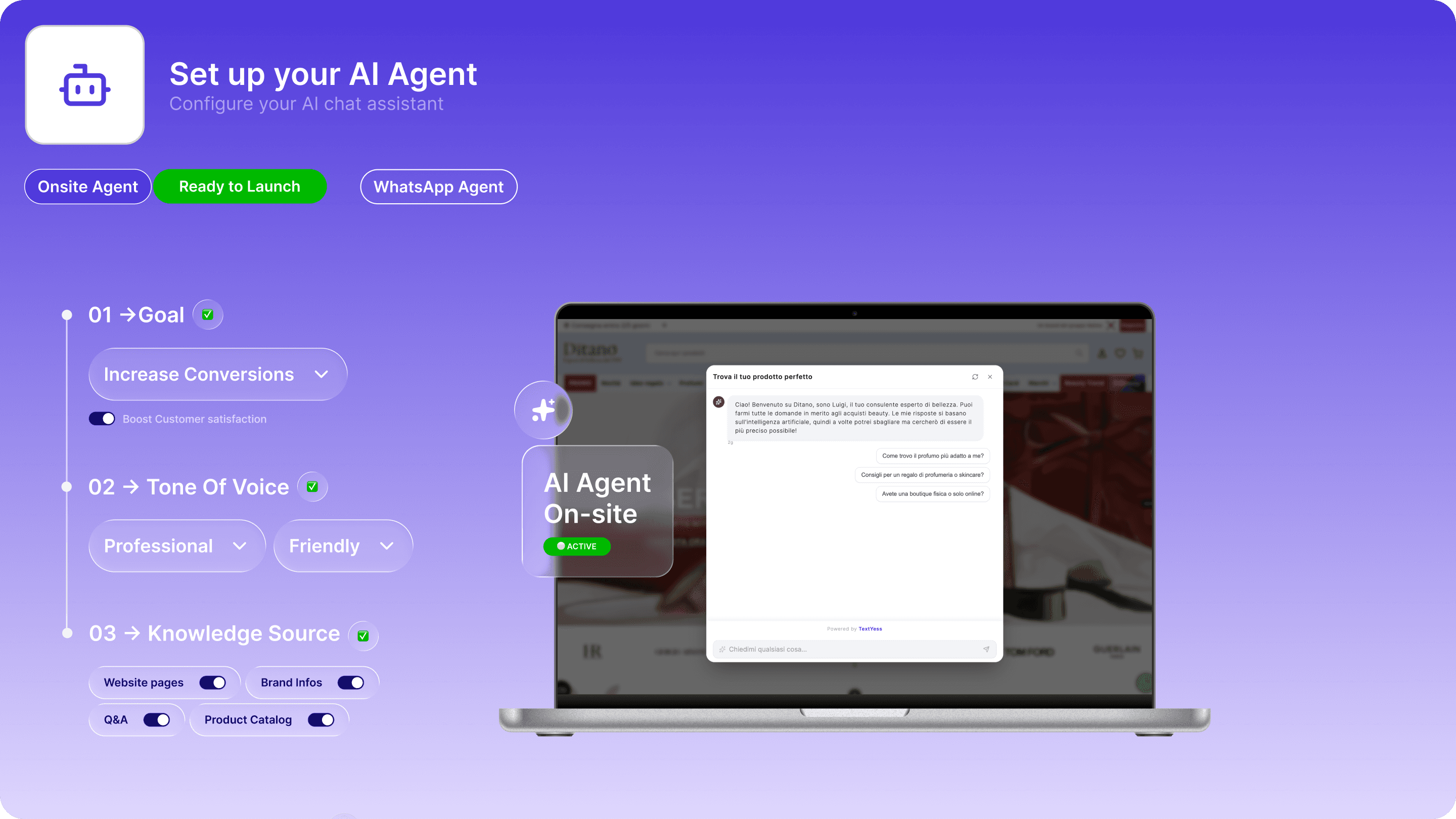
Setting up the AI agent means defining its primary objectives (lead capture, sales, support, or a combination) and aligning its voice with your brand identity. Platforms like TextYess make this configuration possible without code.
Deploy the agent on your website first, then connect it to WhatsApp or other messaging channels. Starting with one channel allows you to refine conversation flows before expanding.
Use the platform's analytics to track lead volume, quality, and conversion rates. The data reveals which conversation flows work best, which triggers drive the most captures, and where drop-offs occur.
Native connections to your ecommerce platform, marketing automation tools, payment gateways, and logistics systems determine whether conversations can include real-time product data and order status.
The platform's ability to pull live product, order, and customer data into conversations separates a genuine sales tool from a glorified FAQ bot.
For brands selling across EU markets, coverage for on-site chat, WhatsApp, and voice—plus localized conversations in multiple languages—is essential for capturing leads across your entire customer base.
Look for dashboards that tie captured leads and revenue back to specific conversations, campaigns, and AI agent interactions. Without this attribution, optimization becomes guesswork.
Platforms that offer fast, no-code setup enable teams to launch and start capturing leads in minutes or hours rather than weeks.
Evaluation Criteria | What to Look For |
|---|---|
Ecommerce integration | Native sync with Shopify, WooCommerce, etc. |
Personalization | Uses live product, order, and customer data |
Channel coverage | On-site, WhatsApp, voice |
Language support | Multi-language, localized conversations |
Analytics | Lead attribution, conversion tracking |
Setup speed | No-code deployment |
The shift from static forms to conversational lead capture changes how ecommerce brands build their pipeline. Rather than interrupting shoppers with generic requests, conversational commerce meets them where they are with relevant, real-time dialogue that provides value while capturing contact information.
TextYess is built specifically for this use case. When a shopper browses your site or messages on WhatsApp, the AI agent engages proactively: answering questions, surfacing relevant products, and capturing contact details as a natural part of the conversation, not as an interruption.
Every interaction feeds into a unified customer profile, so leads arrive with full context: what they browsed, what they asked, what they're likely to buy. Abandoned cart triggers fire automatically, reaching high-intent shoppers within minutes while purchase intent is still fresh. And because the platform supports multi-language conversations across on-site chat and WhatsApp from a single inbox, EU brands can capture leads across every market without adding headcount or managing separate tools. Setup is no-code and connects directly to your existing ecommerce stack.
Book a demo to see how TextYess turns conversations into qualified leads from day one.
How does conversational AI qualify leads better than static forms?
What is the typical ROI of conversational commerce for ecommerce lead generation?
Can conversational lead generation work for B2B ecommerce brands?
How do AI agents handle lead capture in multiple languages?
What happens to leads after they are captured through a conversational AI agent?